
Buying custom shipping boxes in bulk sounds straightforward until size, board strength, printing, MOQ, and freight start affecting the final cost. A poor specification can lead to damaged products, wasted space, higher shipping charges, or a large order of boxes that do not fit your packing process.
This guide explains how to choose the right box type, size, strength, and printing method, understand MOQ and quantity-based costs, compare sourcing channels, evaluate suppliers, and use a practical checklist before placing a bulk order.
What Should You Know Before Ordering Custom Shipping Boxes in Bulk?
Before ordering custom shipping boxes in bulk, define what you are shipping, how the package will travel, how many box variations you need, and when the boxes must arrive. These inputs shape the box specification and prevent suppliers from quoting against incomplete or mismatched requirements.

Define Product and Shipping Needs
Start with the product rather than the box. Product dimensions, packed weight, shape, fragility, and distribution method determine the basic packaging requirements. A lightweight item may only need a standard corrugated carton, while glassware, electronics, or dense metal parts may require stronger board and internal protection. Parcel shipments also face different handling risks from palletized loads. The right shipping box should provide enough protection for the actual distribution conditions without adding unnecessary material, weight, or cost.
Confirm these requirements first:
- Product dimensions and packed weight
- Units packed per box
- Shipping and distribution method
- Inserts, dividers, or cushioning needs
- Storage and stacking conditions
- Branding and printing requirements
Estimate Quantity and SKUs
Custom shipping box planning should start with a clear quantity forecast for each product line. Different products may require different box dimensions, structures, or printed artwork, so one total purchasing number is often not enough. Separate your demand by box specification and SKU before moving into detailed packaging decisions. This gives you a clearer view of what actually needs to be produced and how often each version may need replenishment.
Record the following:
- Estimated total box demand
- Quantity required for each box size
- Number of product SKUs
- Number of artwork or print versions
- Expected monthly or quarterly usage
- Reorder frequency
- Seasonal or launch-related demand
Set Budget and Delivery Timeline
Set a practical budget range and required delivery date before finalizing your custom shipping box project. The budget helps define how much flexibility you have for structure, printing, and additional protection, while the delivery date determines how much time is available for design confirmation, sampling, production, and transport. A clear target at this stage keeps later packaging decisions aligned with your launch, replenishment, or shipping schedule.
Confirm these planning details:
- Target packaging budget
- Required delivery date
- Product launch or restocking schedule
- Time allowed for sampling and approval
- Expected production window
- Domestic or international transport method
Types of Custom Shipping Boxes
Custom shipping boxes usually differ by structure, closure, and strength rather than by appearance alone. RSC cartons suit routine shipping, die-cut mailer boxes work well when presentation and easy opening matter, and full-overlap or heavy-duty boxes provide added support for heavier or more demanding shipments. The right type depends on product weight, packing method, shipping route, and branding needs.
RSC Shipping Boxes

Regular slotted containers (RSC) are one of the most common styles of corrugated box used for bulk transport and fulfillment. All four top and bottom flaps have the same depth, and the two outer flaps meet at the center when closed. RSC boxes are practical for high-volume shipping because they use corrugated board efficiently, assemble quickly, and fit a wide range of products.
They work especially well for e-commerce shipments, retail replenishment, master cartons, apparel, packaged foods, household goods, and products that use inserts or void fill. RSC boxes also stack efficiently on pallets and adapt well to manual or automated packing lines, which makes them a practical choice for repeat bulk orders.
Die-Cut Mailer Boxes

Die-cut mailer boxes are cut from corrugated board into a custom shape that folds into a self-locking structure. They usually need little or no external tape for basic assembly. Mailer boxes suit products that need both shipping protection and a more controlled unboxing presentation, especially for ecommerce, subscription, beauty, apparel, and gift products.
Compared with a standard RSC box, a die-cut mailer can offer cleaner edges, better print coverage, and more flexibility for inserts or branded interior graphics. However, the structure usually requires more converting work and may use more board per box, so it is important to balance presentation value with packing speed, shipping protection, and order volume.
Full-Overlap and Heavy-Duty Boxes

Full-overlap boxes use outer flaps that extend across most or all of the box width, creating extra layers of corrugated board on the top and bottom. This structure is useful when products are heavier, need more support during stacking, or face demanding handling conditions during long-distance transport.
Heavy-duty shipping boxes may also use stronger single-wall or double-wall corrugated board, depending on product weight and distribution conditions. They are often chosen for industrial parts, appliances, dense packaged goods, or export shipments where compression resistance and bottom strength matter more than presentation. The final specification should still match the actual load instead of simply adding more material than necessary.
How Do You Choose the Right Shipping Box Size and Strength?
The right custom shipping box should fit the packed product closely while providing enough space for cushioning and enough board strength for handling, stacking, and transport. Box size and strength should be selected together because an oversized carton wastes space, while an underspecified box can lose shape or protection during shipping.

Measure Product Dimensions
Measure the product after accounting for any retail packaging, protective wrap, or components that will travel inside the shipping box. Record length, width, height, and packed weight rather than relying only on the dimensions shown on a product specification sheet. The dimensions used for box design should reflect the actual packed product, not the bare item.
For multiple products in one carton, determine their packing orientation before setting the box dimensions. You should also consider whether products can be stacked, separated by dividers, or arranged side by side. This step helps reduce unused space and gives you a more accurate starting point for a custom-size shipping box.
Internal vs. External Dimensions
Shipping box dimensions can refer to either the usable space inside the carton or its finished outside size. For product fit, internal dimensions matter most because corrugated board thickness reduces the available space inside the box. This difference becomes more noticeable with thicker flutes and double-wall constructions.
When reviewing custom shipping box specifications, confirm whether the dimensions refer to the inside or outside of the box, how length, width, and height are defined, and whether measurements are listed in millimeters or inches. Clear dimension references help prevent fit problems, especially when several box sizes or different corrugated structures are involved.
Allow Space for Protection
A custom shipping box needs enough clearance for cushioning without leaving excessive empty space. FedEx recommends allowing 2–3 inches (about 50–75 mm) of cushioning on all six sides of the product. For fragile items, its guidance also recommends about 3 inches of cushioning around an inner box when double-boxing.
The exact space still depends on product fragility, weight, cushioning material, and package design. Dense foam, molded pulp, corrugated inserts, and loose-fill materials do not require the same clearance, so the final box dimensions should reflect the actual protection system rather than one fixed gap for every product.
Choose the Right Corrugated Board
Corrugated board should match the product weight, box dimensions, stacking load, and shipping environment. Single-wall board suits many general shipping applications, while double-wall board provides more rigidity for heavier products, larger cartons, or demanding distribution conditions. After choosing the basic board construction, flute profile further affects cushioning, thickness, crush resistance, and printability.
Common flute options include:
- B flute: Often used for RSC shipping boxes, ecommerce cartons, and retail transport boxes where crush resistance and stacking strength matter.
- C flute: Common for general corrugated shipping boxes, moving boxes, appliance cartons, and heavier product packaging that needs more cushioning.
- E flute: Frequently used for custom mailer boxes, subscription boxes, cosmetic shipping boxes, and smaller branded ecommerce packaging because of its thinner profile and smoother print surface.
Match Strength to Shipping Conditions
Shipping conditions should guide the final strength specification of a custom shipping box. ECT (Edge Crush Test) helps evaluate the edgewise compression strength of corrugated board, but it is only one factor. Wall construction, flute combination, coatings, adhesives, box dimensions, and package testing may matter more under specific distribution conditions.
Choose the specification according to the main shipping risk:
- Parcel delivery: Consider 32 ECT or stronger board as a starting reference, then use drop and vibration testing for fragile or higher-value products.
- Palletized freight: Use higher-compression board or double-wall construction when cartons support several stacked layers.
- Long-distance shipping: Add structural strength and verify the packed box with compression, vibration, and shock testing.
- Warehouse stacking: Select board based on carton weight, stacking height, and storage duration rather than ECT alone.
- Humid conditions: Consider water-resistant coatings, moisture-resistant treatments, or water-resistant corrugating adhesives to help maintain board performance.
Printing Options for Custom Shipping Boxes
Printing choices can change the look, cost, and production requirements of custom shipping boxes. The best method depends on order quantity, artwork complexity, color accuracy, and the type of corrugated board. The following options are commonly used for bulk custom shipping box production.
Flexographic Printing

Flexographic printing applies ink directly to corrugated board with flexible printing plates. It works especially well for logos, handling symbols, text, and simple one- to three-color graphics. For repeat bulk orders with relatively simple artwork, flexographic printing can provide an economical balance between speed, consistency, and cost.
Because each color normally requires its own printing plate, setup costs matter more on short runs. The method also has less detail and color control than lithographic printing for photographic images or complex gradients, so it is better suited to shipping boxes where clear branding and functional graphics matter more than premium image reproduction.
Digital Printing
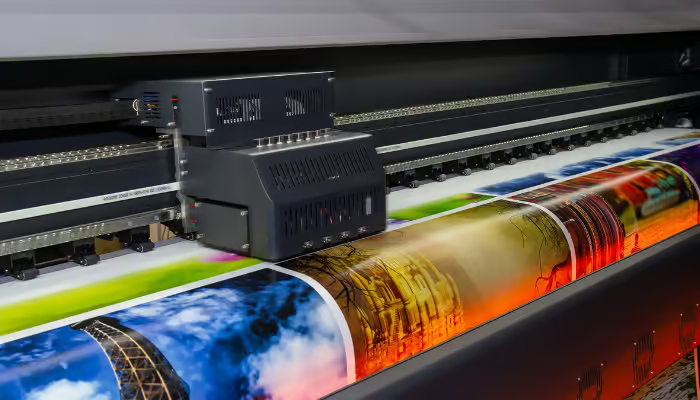
Digital printing is a flexible option for custom shipping boxes in bulk when your order includes multiple SKUs, changing artwork, or smaller quantities per design. Since the artwork prints directly from digital files, you do not need separate printing plates for each version, which simplifies setup and makes design changes easier.
This method also handles detailed graphics, gradients, and full-color branding better than basic flexographic printing. However, for one simple design produced in very large quantities, the unit cost may be higher. Digital printing is most suitable when your bulk shipping box order needs design flexibility, SKU variation, or shorter production runs rather than the lowest cost for one repeated design.
Litho-Laminated Printing

Litho-laminated printing is better suited to custom shipping boxes that need high-detail graphics, precise color reproduction, or a more premium branded appearance. The artwork is first printed on a paper liner with offset lithography, then laminated onto corrugated board before die-cutting and box conversion.
This process is commonly used for printed mailer boxes, retail-ready corrugated boxes, subscription boxes, and high-end ecommerce shipping boxes where visual presentation matters as much as protection. It can reproduce fine text, photographic images, and complex artwork more accurately than basic direct printing on corrugated board. However, the extra printing and laminating steps increase setup time and cost, so litho-laminated boxes are usually more suitable for presentation-focused packaging than simple transport cartons.
CMYK vs. Pantone

When ordering custom shipping boxes in bulk, the choice between CMYK and Pantone affects both visual consistency and print planning. CMYK is better for complex, full-color artwork, while Pantone is more suitable when your brand needs one or two specific colors reproduced consistently across large or repeat orders.
CMYK gives more freedom for gradients, illustrations, and photographic graphics, but color can vary slightly across substrates and production runs. Pantone provides a defined spot-color reference, which helps when logo colors must stay consistent. For bulk custom shipping boxes, confirm the color target during sampling and specify the approved reference before production, especially when printing on kraft or white corrugated surfaces.
How Do MOQ and Quantity Affect Custom Shipping Box Costs?
MOQ and order quantity affect shipping box costs because setup work, material usage, printing, and production time are spread across the number of units produced. Larger runs usually reduce the cost per carton, while smaller or fragmented orders carry a higher share of fixed production costs. The effect becomes more noticeable when one order includes several sizes, structures, or artworks.

Fixed Setup Costs
Each production run may require cutting dies, printing plates, machine setup, color adjustment, and production preparation. These costs change little whether you order 1,000 or 10,000 shipping cartons, so the number of boxes produced directly affects how much setup cost is allocated to each unit.
For example, if setup costs total $500, a 1,000-piece order carries about $0.50 of setup cost per carton. At 10,000 pieces, that portion drops to about $0.05. This is one reason suppliers set MOQs: very small runs can push the unit price too high even when the box size, board grade, and artwork remain unchanged.
Order Volume and Unit Price
Once the setup is fixed, order volume affects unit price through production efficiency and material purchasing. Larger runs usually reduce the cost per carton because machines operate for longer without repeated changeovers, board purchasing can be planned more efficiently, and packing labor is spread across a greater number of units.
The price reduction is usually strongest when you move from a very small run to a medium or large run. After that, savings tend to level off because corrugated board, ink, converting, packing, and freight still add variable costs to every box. For this reason, it is better to compare several quantity tiers—such as 2,000, 5,000, and 10,000 pieces—rather than assuming the highest quantity will always give the best overall purchasing result.
Multiple Sizes and SKU Splitting
Multiple box sizes and printed versions can increase cost even when the total order volume is high. Each size or SKU may require its own production setup, dieline, cutting die, artwork file, or print change, while the quantity assigned to each version becomes smaller. As a result, a 20,000-piece order split across five box sizes may not receive the same unit pricing as 20,000 identical cartons.
SKU consolidation can reduce this effect. If several products can share one carton size, insert system, or common exterior design, you may increase the volume per specification and reduce repeated setup. However, do not force products into oversized packaging only to combine SKUs. The cost saved in production can be offset by extra board usage, void fill, storage space, or dimensional shipping charges.
Where Can You Buy Custom Shipping Boxes in Bulk?
Bulk shipping boxes can be sourced through online packaging suppliers, local packaging companies, or direct custom box manufacturers. The right channel depends on order volume, customization depth, delivery requirements, and how much control you need over box structure, materials, printing, and quality. Comparing these sourcing options first can help you avoid paying for capabilities you do not need—or choosing a supplier that cannot support a more complex project.

Online Marketplaces
Online marketplaces are useful when you want to compare ready-made cartons or identify multiple packaging suppliers before contacting them directly. The main difference is that some platforms focus on purchasing stock packaging, while others are better for finding manufacturers that can produce custom sizes, printing, and bulk orders.
Common options include:
- Alibaba.com: Suitable for sourcing custom corrugated boxes from overseas suppliers. Listings commonly show MOQ, indicative pricing, supplier profiles, and customization options, which makes the platform useful for initial supplier comparison.
- Global Sources: More focused on international supplier discovery. Its supplier system includes Verified Suppliers and Verified Manufacturers, with third-party checks on business registration and manufacturing scope.
- Amazon Business: Better suited to standard shipping cartons and routine replenishment than highly customized packaging. It supports business purchasing, recurring orders, and large SKU quantities, but it is not primarily a custom box development platform.
Local Packaging Suppliers
Local packaging suppliers are a practical option when delivery speed, easier communication, or smaller repeat orders matter more than achieving the lowest possible production cost. They can be especially useful for urgent replenishment, regional distribution, or projects that benefit from shorter transport distances and faster sample turnaround.
Their capabilities vary widely, so location alone should not drive the decision. Some local suppliers focus mainly on stock corrugated cartons, while others can support custom sizes, printed shipping packaging, inserts, and structural development. Before ordering, confirm whether the supplier can meet your required board grade, print method, order volume, lead time, and repeat-order consistency.
Direct Custom Box Manufacturers
Direct sourcing is better suited to projects that require custom dimensions, specific corrugated board grades, structural changes, branded printing, inserts, sampling, or repeat bulk production. It also gives you more control over technical details because the specification, artwork, tooling, sample approval, and production requirements can be coordinated within one process.
This route is especially useful when packaging must be developed around a product rather than selected from existing stock sizes. Gentlever supports custom shipping packaging from structure and material selection through printing, sampling, and bulk production. If you already know your approximate dimensions, quantity, artwork, and delivery requirements, you can share them with Gentlever to develop the specification and request a custom quote.
How Do You Compare and Choose a Shipping Box Supplier?
Choosing a supplier should go beyond comparing the lowest unit price. You need to check whether each quote is based on the same box specification, then compare customization capability, MOQ, lead time, sample quality, production control, and delivery support. A cheaper quote can become more expensive if the board grade, printing method, packing standard, or freight terms are different.

Compare the Same Specifications
Supplier quotations are only meaningful when they are based on the same technical requirements. A lower price may come from thinner board, a different flute, reduced print coverage, simpler packing, or different shipping terms rather than better production efficiency.
Before comparing prices, align the quotation basis for:
- Box dimensions and structure
- Corrugated board grade and flute
- Printing method and color requirements
- Order quantity for each size or SKU
- Sampling and tooling charges
- Packing method
- Shipping terms and destination
Compare like-for-like specifications first, then evaluate price. This prevents a low quote from appearing more competitive simply because it includes less material, fewer services, or different delivery terms.
Check Customization Capability
A suitable supplier should support more than simple size changes. For bulk shipping packaging, look for capabilities in custom dimensions, structural design, corrugated board selection, printing, inserts, dieline development, and sample production. This becomes especially important when one order includes several SKUs or different packaging formats, because the supplier needs to coordinate specifications consistently across the full project.
Review MOQ and Lead Time
MOQ and lead time should match your actual purchasing plan rather than forcing you into excess inventory or an unrealistic delivery schedule. Ask whether the MOQ applies per size, per artwork, or per total order, and separate sample time, production time, and shipping time when reviewing the schedule. This helps you see whether the supplier can support both the first order and later replenishment without creating avoidable stock or timing problems.
Review Samples and Quality Control
Samples and quality-control procedures help you judge whether a supplier can deliver consistent results at scale. Compare how each supplier handles sample approval, dimensional accuracy, print consistency, material checks, and final inspection before choosing one. A supplier with clear QC steps, documented tolerances, and repeatable sample-to-production consistency is generally a safer choice for bulk shipping packaging than one that only provides a low price.
Evaluate Shipping and Service
For bulk custom shipping box orders, supplier service should cover more than making the cartons. Compare how each supplier handles export packing, freight coordination, delivery schedules, production updates, and communication when box sizes, artwork, or quantities change. This matters especially for overseas sourcing, where delays in production or shipping can affect your packaging inventory, product launches, and fulfillment schedule.
Custom Shipping Box Supplier Checklist
Before placing a bulk custom shipping box order, confirm the final production and commercial details in writing. This checklist helps make sure the boxes you approve are the same boxes the supplier produces and ships.
- Box size and structure: Confirm internal dimensions, box style, flute type, board grade, wall construction, and any inserts or dividers.
- Printing details: Approve the final dieline, artwork file, printing method, CMYK or Pantone references, print coverage, and logo position.
- Order quantity: Confirm the quantity for each box size, SKU, or printed version, along with the MOQ applied to each specification.
- Samples and quality: Approve the physical sample or proof and agree on dimensional tolerance, print registration, material consistency, folding, gluing, and inspection requirements.
- Pricing and setup costs: Check the final unit price, tooling charges, printing plate fees, sample costs, and any additional setup charges.
- Production schedule: Confirm production lead time, packing method for finished cartons, labeling requirements, and the planned completion date.
- Shipping and delivery: Verify freight method, Incoterms, delivery destination, customs responsibility, and the required arrival date.
Conclusion
Buying custom shipping boxes in bulk requires more than choosing a carton and comparing prices. You need to define product requirements, select the right size and strength, match the printing method to your artwork and volume, understand MOQ and quantity effects, and compare suppliers using the same specification. A clear pre-order checklist helps reduce mistakes before production starts.
If you are planning a new packaging project or repeat bulk order, Gentlever can support box structure, corrugated material selection, printing, sampling, and production. Contact us with your approximate dimensions, quantity, artwork, and delivery requirements to discuss the right shipping packaging solution and request a custom quote.