 Skip to main content Skip to footer

Finished rigid boxes may leave production in perfect condition yet arrive with scratched surfaces, crushed corners, or warped lids. Bulk shipping and storage expose premium packaging to friction, stacking pressure, and moisture. Even minor damage can delay product packing, increase replacement costs, and weaken a brand’s presentation.
Protecting finished rigid boxes requires more than stronger outer cartons. This guide covers surface protection, carton packing, palletizing, storage conditions, and shipment checks so you can reduce damage and set clear supplier requirements.
What Causes Damage to Finished Rigid Boxes During Shipping and Storage?

Finished rigid boxes can suffer damage from surface friction, physical pressure, and moisture exposure during transportation and storage. Scratches, deformed corners, warped panels, and weakened adhesive joints can affect their appearance and structural integrity. Understanding these risks helps you choose suitable protective materials, packing methods, and storage conditions before bulk shipping.
Scratches and Surface Damage
Surface scratches often occur when finished rigid boxes rub against each other or contact rough packing materials. Transportation vibration, repeated handling, and movement inside cartons can create visible scuff marks. Dark-colored packaging and smooth decorative surfaces tend to reveal these imperfections more clearly.
Different finishes also respond differently to friction. Matte lamination and soft-touch coatings may develop shiny rub marks, while glossy surfaces can show fine scratches. Foil stamping and embossed details may suffer abrasion or localized damage, reducing the premium appearance of finished boxes.
Dents and Box Deformation
Dents and deformation typically result from excessive stacking pressure, impacts, or uneven weight distribution. Heavy loads can crush corners and edges, while repeated collisions during transportation may distort lids and sidewalls. Larger boxes with unsupported panels can be particularly vulnerable to concentrated pressure.
Structural damage can also affect how rigid boxes function. A deformed lid may no longer fit its base correctly, while pressure on drawer boxes can affect their sliding mechanism. The severity depends on paperboard thickness, box dimensions, structural design, and handling conditions.
Moisture and Adhesive Damage
Rigid boxes contain paperboard and wrapping materials that respond to changes in environmental humidity. Excessive moisture absorption can cause swelling, warping, and surface wrinkles, particularly on large flat panels. Temperature fluctuations during international shipping may also create condensation, increasing the risk of moisture-related damage.
Moisture and temperature changes can also affect adhesive bonds, depending on the glue formulation and curing conditions. Wrapping paper may lift around corners, edges, or folded sections when bonding weakens. These defects can compromise both the appearance and structural stability of finished rigid boxes, especially during prolonged storage.
How to Protect Finished Rigid Boxes During Shipping and Storage?
Protecting finished rigid boxes requires multiple layers of protection, from individual wrapping to reinforced master cartons and secure palletizing. The most effective approach combines surface protection, movement control, compression resistance, and moisture management. Each method should match the box dimensions, decorative finishes, shipping conditions, and expected storage period.
Prepare Finished Boxes Before Packing

Before packing finished rigid boxes, ensure that all printing, lamination, and adhesive processes are complete. Wrapping paper and glued corners must reach the appropriate drying or curing condition to prevent lifting, surface marks, or deformation. Packing boxes too early can trap moisture or damage delicate finishes, especially when freshly finished surfaces come into direct contact.
Remove dust, paper scraps, and other loose particles from box surfaces before wrapping. Allow sufficient time for finishes and adhesive bonds to stabilize according to the materials and production process. Avoid stacking boxes too tightly or applying excessive pressure during this stage, as premature stacking can leave impressions, scuff marks, or damaged decorative details.
Wrap Boxes to Prevent Surface Scratches

Individual wrapping helps protect finished rigid boxes from friction, scratches, and scuff marks during transportation and storage. Soft tissue paper, smooth paper sleeves, and non-abrasive protective films can create a barrier between adjacent boxes. Boxes with matte lamination, soft-touch coatings, foil stamping, or glossy finishes may need extra protection, as surface contact can leave visible marks or damage decorative details.
Choose wrapping materials that are clean, smooth, and compatible with the box finish. Avoid rough paper, exposed adhesive, or plastic films that may stick to coated surfaces during prolonged storage. The wrapping should cover vulnerable panels and edges without applying excessive pressure. For sensitive finishes, test the material on finished samples before bulk packing to check for abrasion, sticking, or surface changes.
Protect Corners and Vulnerable Edges

Finished rigid boxes are particularly vulnerable to damage at corners and exposed edges, where concentrated impacts can cause dents or crush the paperboard structure. Corrugated corner guards, protective pads, and shaped cushioning materials can provide additional support during handling and transportation.
Corner protection should match the box structure and its most vulnerable areas. For boxes with sharp edges, raised decorations, or irregular shapes, protective pieces should fit securely without pressing against delicate surfaces. Poorly fitted guards may create pressure marks instead of preventing damage.
Choose Strong and Properly Sized Master Cartons

Measure the full group of wrapped rigid boxes, including protective materials, before selecting a master carton. Start with 3–5 mm of clearance per side for closely packed boxes. For example, a packed group measuring 400 × 300 × 200 mm (L × W × H) could fit into a carton with internal dimensions of 406–410 × 306–310 × 206–210 mm. Adjust this trial allowance after sample packing.
Single-wall corrugated cartons may suit lighter loads, while double-wall cartons offer greater stacking strength. Check ECT ratings and carton compression strength against expected loads, and test a fully packed carton before bulk shipping.
Control Packing Density and Box Movement

Proper packing density prevents finished rigid boxes from shifting or colliding during transportation. Excessive empty space increases movement, while overly tight packing can damage lids and corners. Arrange boxes in stable rows or layers, using suitable inserts and cushioning materials to keep them securely positioned. Common options include:
- Corrugated dividers: Separate adjacent boxes into compartments to reduce friction and sideways movement.
- Die-cut cardboard inserts: Hold boxes in fixed positions, particularly for irregular shapes or mixed sizes.
- Corrugated layer pads: Separate stacked layers and distribute pressure more evenly.
- Foam sheets and blocks: Cushion boxes, fill empty spaces, and absorb impacts during handling. Choose suitable foam density and firmness to avoid excessive pressure.
- Bubble wrap: Adds cushioning around individual boxes or between layers, provided it does not leave marks on decorative finishes.
- Kraft paper void fill: Fills small gaps to limit movement without applying excessive pressure.
Secure Pallets for Safe Transportation

Proper palletizing prevents master cartons from shifting, tilting, or collapsing during bulk transportation. Choose pallets with sufficient load capacity and arrange cartons in stable, evenly distributed layers. Place heavier cartons at the bottom and keep all cartons within the pallet boundaries. Column stacking generally provides better vertical compression strength, while interlocking patterns may improve load stability.
Secure the entire load with stretch wrap, extending the film around the pallet base to prevent shifting. Apply enough wrapping tension to stabilize the cartons without deforming them. Check pallet stability before loading, and ensure forklifts can handle the load without excessive tilting or sudden impacts.
Add Moisture Protection for International Shipping

International shipping, especially ocean freight, can expose finished rigid boxes to high humidity and condensation. Use moisture-resistant carton liners, sealed plastic bags, or properly sized desiccants to reduce moisture exposure during transit. Ensure boxes and packing materials are dry before sealing, as trapped moisture can cause paperboard warping, surface wrinkles, and adhesive failure.
Before loading, inspect shipping containers for leaks, damp floors, and visible moisture. Keep cartons on dry pallets and away from wet container surfaces. The IMO/ILO/UNECE CTU Code, Annex 3, provides guidance on preventing condensation damage, including moisture-related deterioration of cardboard packaging during long voyages.
Maintain Proper Storage Conditions

Store finished rigid boxes in a clean, dry warehouse with stable temperature and humidity. Avoid areas near windows, heating equipment, or exterior doors where environmental conditions fluctuate. Keep cartons on pallets or shelving rather than directly on concrete floors to reduce moisture exposure. Follow the approved stacking height and weight limits, as prolonged pressure can gradually deform boxes in lower layers.
For long-term storage, label cartons with production dates and follow the first-in, first-out (FIFO) inventory method to prevent unnecessary aging. Check stored cartons periodically for moisture, deformation, or unstable stacks. Before using boxes that have been stored for extended periods, inspect representative samples for warped panels, loose wrapping, and lid-fitting problems. If boxes have experienced significant temperature changes, allow them to adjust to the packing area’s conditions before use.
Protection Requirements for Different Rigid Box Styles
Rigid box designs differ in structure, closure mechanisms, and resistance to external pressure. A packing method that works for one box style may not provide sufficient protection for another. The following sections explain the specific risks and protection requirements for common rigid box styles during bulk shipping and storage.
Two-Piece Lid and Base Boxes

Two-piece rigid boxes have separate lids and bases that can shift, rub, or experience uneven pressure during transportation. Protection should focus on preventing friction between components, maintaining their shape, and avoiding damage to fitted edges. The following measures help protect these boxes during bulk shipping:
- Separate Contact Surfaces: Place soft tissue paper between the lid and base to prevent scratches and friction marks.
- Secure the Lid: Keep the lid properly fitted to prevent unwanted movement without applying excessive pressure.
- Protect Exposed Edges: Avoid direct pressure on lid rims and base corners, which can cause dents or affect the fit.
- Consider Separate Packing: Pack lids and bases separately when their design allows safe stacking or nesting, reducing shipping volume.
- Avoid Forceful Nesting: Leave enough clearance between nested components to prevent sticking, surface abrasion, or deformation.
Magnetic Closure and Drawer Boxes

Magnetic closure boxes and drawer rigid boxes contain moving components that require careful handling during bulk shipping. Hinged lids, magnetic flaps, sliding trays, and ribbon pulls can become misaligned or damaged under pressure. Protection should focus on keeping these components secure while preserving their opening and closing functions. Key measures include:
- Secure Magnetic Flaps: Keep magnetic lids properly closed during packing. Use removable paper bands or protective sleeves to prevent accidental opening.
- Protect Hinged Sections: Avoid bending or applying concentrated pressure to the hinge area, which may damage the wrapping material or affect lid alignment.
- Stabilize Drawer Trays: Secure inner trays to prevent sliding during transportation. Avoid excessive compression on the outer sleeve, which can restrict drawer movement.
- Protect Ribbon Pulls: Position ribbons inside or alongside the box without sharp folds, trapping, or excessive tension.
- Check Closure Function: Test magnetic alignment and drawer movement after sample packing to ensure the protective arrangement does not interfere with normal operation.
Collapsible Rigid Boxes
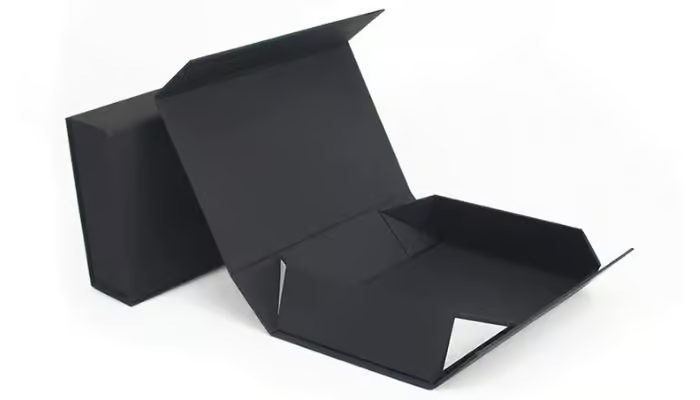
Collapsible rigid boxes typically ship flat to reduce transportation volume, but their folding joints, adhesive strips, and connected panels require careful handling. Excessive pressure or improper folding can damage these components and affect assembly after delivery. Consider the following precautions:
- Keep Panels Flat and Aligned: Stack folded boxes evenly to prevent bending, twisting, or permanent creases.
- Protect Folding Joints: Avoid concentrated pressure on hinges and fold lines that may damage the wrapping material.
- Preserve Adhesive Strips: Keep protective release liners intact and prevent adhesive areas from contacting other surfaces.
- Limit Stacking Pressure: Avoid excessive weight that could deform folded panels or damage pre-installed components.
Custom-Shaped Rigid Boxes

Custom-shaped rigid boxes, such as round, heart-shaped, hexagonal, and pyramid boxes, often have curved surfaces, pointed corners, or irregular dimensions that make standard carton arrangements less suitable. Each shape requires support that matches its contours and prevents pressure from concentrating on vulnerable areas. Consider these protection methods:
- Round Rigid Boxes: Use fitted compartments or curved supports to prevent rolling and sideways movement. Avoid stacking heavy cartons directly against unsupported curved walls.
- Heart-Shaped Boxes: Protect the pointed bottom and curved upper sections with shaped cushioning to prevent dents and deformation.
- Triangular and Hexagonal Boxes: Position boxes within die-cut compartments that support their flat panels while preventing concentrated pressure on sharp corners.
- Pyramid and Other Custom-Shaped Boxes: Provide fitted supports around protruding sections and avoid direct stacking that places weight on narrow tips or uneven surfaces.
How to Check Rigid Box Protection Before Bulk Shipment?
Before bulk shipment, inspect the completed packaging and evaluate whether it can withstand expected transportation conditions. Key checks include carton integrity, pallet stability, shipping performance, and damage acceptance criteria. These inspections help identify weaknesses before large quantities of finished rigid boxes leave the production facility.

Select Representative Samples for Inspection
Select samples from the actual production batch rather than relying only on specially prepared prototypes. Samples should reflect the final box dimensions, surface finishes, protective materials, and master carton configuration. Include cartons from different production runs or packing groups when relevant, especially if the order contains multiple box sizes or packaging styles.
Prepare fully packed master cartons using the intended quantity of finished rigid boxes, separators, and cushioning materials. Record each sample’s packed weight, dimensions, and packing arrangement before testing. The number of samples should follow the agreed inspection plan and account for the risks associated with the shipment.
Conduct Shipping and Compression Tests
Transportation testing helps evaluate how packed rigid boxes respond to handling impacts, vibration, and stacking pressure. Use representative shipping conditions rather than applying the same test intensity to every order. Common tests include:
- Drop Tests: Simulate handling impacts to check whether finished boxes suffer dents, scratches, or structural damage.
- Vibration Tests: Reproduce transportation movement to identify internal shifting, surface friction, and packaging instability.
- Compression Tests: Assess whether master cartons can withstand expected stacking loads without damaging their contents.
The ASTM D4169 standard provides a framework for evaluating shipping units under distribution conditions, while ASTM D642 covers compression testing of shipping containers and unit loads. Select the test methods and severity levels based on the shipment’s actual handling and transportation requirements.
Verify Packing Standards and Damage Criteria
Packing standards should define measurable requirements for the final shipping configuration. These include master carton dimensions, corrugated board specifications, packing quantity, protective material placement, maximum carton weight, and pallet stacking limits. Compare the actual packing configuration against approved specifications rather than relying on general requirements such as “sufficient protection.”
Damage acceptance criteria establish which defects are acceptable and which require corrective action. For premium rigid boxes, visible scratches, corner dents, surface peeling, and deformation affecting lid closure may be classified as unacceptable defects. Define cosmetic tolerances using approved samples and agreed inspection conditions, and set defect limits according to the inspection plan. The packaging method passes only when the test results meet these established requirements.
Key Shipping Requirements to Confirm With Your Rigid Box Supplier
Clear shipping requirements help prevent misunderstandings between your business and the rigid box supplier before production and dispatch. Confirm the approved packing method, carton and pallet specifications, shipment documentation, and damage responsibilities in advance. Written agreements make it easier to maintain consistent packaging protection and resolve delivery problems.

Packing Specifications and Order Confirmation
Before placing a bulk order, agree on the final protective packing method with your supplier. Specify whether boxes require individual wrapping, protective sleeves, separators, or other materials. Request a packing sample or detailed photographs for approval, particularly when ordering rigid boxes with delicate finishes or unusual structures.
Record the approved packing arrangement in the purchase order or packing specification. Include the orientation of boxes, number of units per layer, and any special handling instructions. Require your supplier to obtain approval before changing protective materials or packing methods during production.
Master Carton and Pallet Requirements
Confirm the master carton dimensions, packing quantity, gross weight, and pallet configuration before shipment. These details affect freight calculations, warehouse handling, and container loading. Ask your supplier to provide a carton packing specification showing the final dimensions, weight, and quantity per carton.
For palletized shipments, agree on the pallet dimensions, maximum load height, total pallet weight, and stacking arrangement. Check whether your destination has specific wooden pallet treatment or marking requirements. These details should match your freight forwarder’s handling and delivery requirements.
Pre-Shipment Documentation and Approval
Request shipment documents that allow you to verify the packing configuration before dispatch. A packing list, carton labels, pallet details, and photographs of completed shipments help confirm that the order follows the approved arrangement.
For larger orders, you may also request inspection reports and relevant packaging test records. Agree on the documents required for shipment approval and the deadline for reviewing them. If any packing details differ from the confirmed specifications, resolve those differences before releasing the goods for transportation.
Damage Acceptance and Claims Procedures
Establish clear procedures for reporting transportation damage before the shipment leaves your supplier. The agreement should specify the inspection period after delivery, required damage evidence, and the process for submitting claims. Photographs, carton labels, delivery records, and inspection reports can help identify the extent and possible cause of damage.
Clarify which party handles damage claims, replacement arrangements, or compensation under the agreed sales terms and transport contract. Shipping terms, insurance coverage, and the point at which risk transfers can affect responsibility. Written procedures reduce disputes and help both parties respond consistently when damaged rigid boxes arrive.
Conclusion
Protecting finished rigid boxes during bulk shipping and storage requires careful preparation, suitable protective materials, proper carton packing, and secure palletizing. Different box structures also need specific handling methods to prevent scratches, deformation, and moisture damage. Clear packing specifications and pre-shipment testing help reduce damage risks, avoid replacement costs, and preserve packaging quality throughout transportation.
At Gentlever, we provide custom rigid box solutions tailored to your packaging requirements. Whether you need luxury gift boxes, magnetic closure boxes, or custom-shaped packaging, contact us to discuss your project, including protective packing options, bulk order requirements, and shipping arrangements.