 Skip to main content Skip to footer

Jewelry can shift, scratch, tangle, or lose its intended display position when the insert does not match the product. For brands selling rings, earrings, necklaces, bracelets, or watches, the insert directly affects product protection, presentation, and the customer’s first impression when opening the box.
Choosing the right jewelry box inserts requires careful attention to structure, material, fit, and use conditions. This guide explains the main insert options, how to match them with different jewelry types, and what to check before approving a custom insert for production.
What Are Jewelry Box Inserts and Why Are They Important?
Jewelry box inserts are interior components designed to hold jewelry in a defined position inside the box. They support the product, limit unnecessary movement, separate individual pieces, and improve the way jewelry appears when the box opens. The right insert combines protection, organization, presentation, and easy product removal.

Protect Jewelry From Damage
Jewelry can move during packing, transport, storage, and repeated handling. That movement may cause polished surfaces to rub, delicate components to experience pressure, or different pieces to contact each other. The insert creates a controlled interior space that limits unnecessary movement and reduces these risks.
Protection depends on more than softness. The insert must also provide enough support for the jewelry’s weight and shape. A suitable insert keeps the product stable without placing excessive pressure on delicate areas, which helps preserve its condition from packing through final delivery.
Keep Jewelry Secure and Organized
An insert keeps jewelry in its intended position rather than allowing it to shift freely inside the box. This creates a more orderly interior and becomes especially important when several pieces share the same box.
Good organization also improves usability. Customers can immediately see where each item belongs and return it to the same position after use. The insert therefore supports both secure storage and a consistent arrangement, rather than serving only as decorative padding.
Improve Presentation and Unboxing
The insert influences how the jewelry appears the moment the box opens. It controls visual spacing, product position, height, and the amount of empty space around each piece. These details can make the jewelry look more balanced and intentional.
A clean interior also keeps attention on the product itself. The insert acts as a visual background that supports the jewelry rather than competing with it. For premium jewelry boxes, this relationship between protection and presentation plays an important role in the overall unboxing experience.
Jewelry Box Inserts for Different Types of Jewelry
Different jewelry products need different interior support because their shapes, weights, and storage risks vary. The insert should match the jewelry’s form and keep each piece stable without hiding important design details or making removal difficult.
Ring Inserts
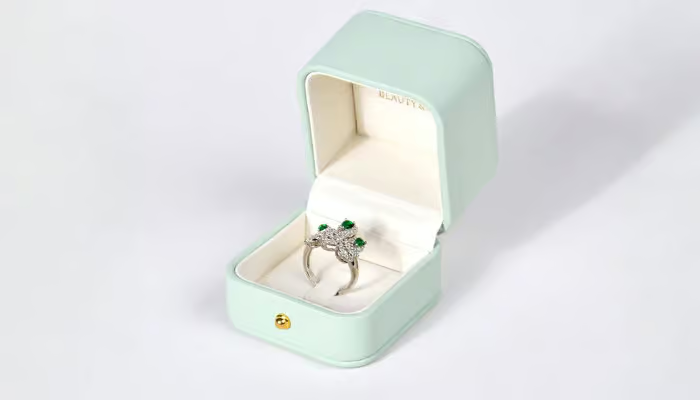
A ring box insert must stabilize the ring, keep a clean display angle, and allow easy removal. The right structure depends on band width, setting height, and ring size. Fit is mostly about tolerance — slots are typically cut 0.3–0.6mm wider than the raw band to allow for fabric wrapping, and depth should expose 60–70% of the band height for grip without tipping. Setting height also matters: if the stone sits high above the band, the ring box slot may need to shift off-center to avoid pressing against the lid.
- Ring Slots: A narrow cut holds the band while leaving the decorative face visible above the surface. This format works especially well for single-ring presentation and compact box interiors.
- Ring Rolls: Several padded rows create channels that keep multiple rings upright and evenly spaced. You often see this layout in boxes designed for collections, sets, or retail display.
- Ring Clips: Instead of relying on a simple opening, a clip secures part of the band and gives better control over orientation. It works well when the ring needs to stay facing forward during handling and presentation.
- Raised Holders: By lifting the ring above the surrounding surface, this structure draws more attention to the stone or decorative setting. It suits presentation-led boxes where the ring should become the visual focus.
Earring Inserts

Keeping both pieces of a pair aligned is the main job of an earring box insert, along with supporting the post or wire without loosening over time. Fit comes down to tolerance: post holes are typically drilled 0.3–0.5mm wider than the post diameter, tight enough to hold the earring upright but loose enough for easy insertion. Drop earrings need extra vertical clearance too, often 10–15mm above the base, so the earring box has room for the piece to hang freely without touching the surface.
- Padded Boards: A flat or slightly cushioned board holds earrings through small holes or slits. This format keeps pairs neatly aligned and works well for studs, small hoops, and lightweight drop earrings.
- T-Bar Stands: A horizontal bar lifts the earrings above the base of the box and creates more open space around them. It works especially well for drop earrings or designs that look better when they hang naturally.
- Pedestal Holders: Raised supports position the earrings higher inside the box, making them more visible from the front. This structure suits gift boxes and presentation-focused designs where the jewelry needs stronger visual emphasis.
- Sloped Holders: An angled surface tilts the earrings toward the viewer instead of leaving them flat. The slope improves frontal visibility and can make stones, settings, or decorative details easier to see as soon as the box opens.
Necklace and Pendant Inserts

Chains tangle easily, so the real challenge for a necklace box insert is holding the pendant centered while keeping the chain controlled around it without kinking. Fixing points should sit close enough together to stop sliding, but not so tight that thin chains stretch under tension. Slot widths are usually cut to match chain gauge plus a small allowance, and in a well-built necklace box the pendant recess is sized 1–2mm deeper than the pendant’s thickness to prevent rocking without hiding its face.
- Flat Display Boards: A flat board supports the necklace across the surface and keeps the pendant visible at the center. Small fixing points near the upper or side edges help maintain the chain position.
- Slotted Holders: Narrow cuts secure sections of the chain and help control the overall necklace shape. This structure works well when the chain needs to stay symmetrical around the pendant.
- Hook Holders: Small hooks anchor the chain at selected points and keep it from sliding across the insert. They are useful when the necklace needs stronger positional control inside the box.
- Elastic Band Holders: Elastic bands hold the chain or pendant gently against the surface. They provide flexible restraint and can make product removal easier than a rigid fixing structure.
- Recessed Pendant Holders: A shallow recessed area gives the pendant a defined position and helps reduce rolling or sideways movement. The chain can remain arranged around or behind the main display area.
Bracelet and Bangle Inserts

Flexible chain bracelets drape, while rigid bangles and cuffs hold a fixed diameter — so a bracelet box insert has to account for two very different behaviors in one structure. Pillow supports are usually sized slightly smaller than the bracelet’s natural drape so it wraps without flattening, while cradles for rigid pieces need a radius 1–2mm wider than the bangle’s outer diameter to seat it without forcing the shape. A well-fitted bracelet box also leaves clearance around the clasp so it doesn’t press against the lid.
- Pillow Supports: A padded pillow lets the bracelet wrap naturally around the center support and helps maintain its curved form. It also raises the jewelry slightly, making the bracelet more visible when the box opens.
- Curved Cradles: A shaped cradle follows the natural arc of a bangle or cuff and provides more side support than a flat base. This structure works especially well for rigid pieces that should remain stable during handling.
- Elastic Strap Holders: Elastic straps secure the bracelet against the insert surface while allowing some flexibility for small size differences. This can help when one bracelet box design needs to fit several closely related products.
- Slotted Holders: Narrow cuts or openings secure selected parts of the bracelet, such as the clasp or end sections. They suit flatter bracelet box layouts where the jewelry lies across the insert rather than wrapping around a raised support.
Watch Inserts

Most of the fit challenge in a watch box insert comes from the strap curve rather than the case itself, since the case, strap, and buckle all need to sit as one stable unit. Watch pillows are typically sized in 20–24mm diameter increments to match common strap lengths, holding the curve without overstretching the leather or links. A shallow watch box needs a lower-profile structure, with case wells cut for a few millimeters of side clearance to avoid scuffing the finish.
- Watch Pillows: Padded pillows sit inside the strap or bracelet and help preserve its rounded shape. This structure works well for both leather straps and metal bracelets while keeping the dial raised for clear presentation.
- C-Shaped Holders: Curved supports follow the inside profile of the strap and give the watch a more defined position. Compared with a soft pillow, they provide firmer control and suit watches with relatively rigid bracelets.
- Slot Holders: Narrow slots secure part of the strap or buckle while the watch rests closer to the insert surface. This lower-profile format fits compact watch boxes where internal height is limited.
- Recessed Watch Beds: Shaped recesses create a defined resting area for the watch case and part of the strap. The surrounding structure reduces side movement and gives the product a cleaner, more integrated appearance.
Jewelry Set Inserts

Jewelry set inserts arrange several pieces inside one box while keeping each item separated, stable, and easy to view. Depending on the set, the box can combine ring slots, earring boards, necklace tabs, bracelet pillows, or watch holders within one coordinated insert. The layout should give larger pieces more space while keeping smaller items clearly positioned around them.
Some jewelry set boxes also use multi-section trays, removable trays, or layered inserts when the collection includes several pieces. The final structure should match each item’s size, shape, and holding needs while preventing contact during handling and transport.
Common Jewelry Box Insert Materials and Key Characteristics
Jewelry box inserts can use different structural and surface materials depending on requirements for protection, appearance, durability, and cost. The material choice should match the jewelry type and the way the box will be used, rather than focusing on softness or appearance alone.
Foam Inserts

Foam is one of the most common structural materials for jewelry box inserts because it can be cut into precise slots, cavities, and product profiles. EVA, PU, and PE foams provide different levels of firmness and cushioning, so the right choice depends on the weight, shape, and support requirements of the jewelry.
EVA generally offers firmer support and better shape retention, while PU feels softer and compresses more easily. PE foam provides a relatively firm, lightweight structure. Foam can also act as a core beneath velvet, microfiber, satin, or other coverings, allowing the insert to combine structural support with a softer presentation surface. The Polyurethane Foam Association notes that PU foam performance varies with density, firmness, support, and resilience, which directly affects how the insert cushions and supports jewelry.
Velvet and Fabric-Covered Inserts

Velvet and other fabric-covered inserts are widely used when presentation and surface feel matter as much as protection. Velvet, satin, silk, and microfiber can create a softer contact surface around jewelry, while the underlying foam or paperboard provides most of the structural support. The fabric covering mainly improves appearance, touch, and surface protection rather than acting as the load-bearing insert itself.
Different fabrics create different visual effects. Velvet gives the interior a dense, soft finish, while satin and silk create a smoother surface with more sheen. Microfiber offers a cleaner, more understated look. The final result also depends on how tightly the fabric wraps the core, especially around corners, slots, and recessed areas where wrinkles or exposed adhesive can affect the finish.
Paperboard Inserts

Paperboard inserts provide a lightweight, printable, and relatively simple structure for jewelry boxes. They can be die-cut, folded, slotted, or layered to hold rings, earrings, necklaces, and small sets. Paperboard works especially well when the box design prioritizes a clean paper-based interior, lower weight, or easier material separation.
Compared with foam, paperboard offers less cushioning and adapts less easily to irregular shapes. However, it can create precise folded structures and integrates well with printed graphics, branded colors, or paper-wrapped surfaces. If responsible fiber sourcing matters to the project, you can also specify FSC-certified paperboard from an appropriate certified supply chain. For custom projects, the board thickness, fold strength, slot position, and surface finish all affect how securely the jewelry stays in place.
Cotton and Soft Padding Inserts

Cotton and other soft padding materials create a cushioned interior without requiring the precise cavities or rigid profiles associated with shaped foam. They can work well for lightweight jewelry, small gift boxes, or designs where the product rests on a soft bed rather than locking into a fixed position. Their main limitation is positional control: soft filling can cushion the product, but it does not automatically stop a ring, pendant, or chain from moving inside an oversized box.
Compression also affects long-term appearance. Loose cotton, batting, or similar padding can flatten after repeated handling and may shift away from the original loading position. For that reason, the box dimensions should remain relatively close to the product size, or the soft padding should work with another retaining feature. Choose this material when gentle support and visual softness matter more than precise product retention.
Leatherette and Suede Inserts

Leatherette and suede work best in jewelry boxes when they form the visible surface over a shaped insert core. They can cover ring slots, necklace platforms, bracelet supports, or multi-piece trays while keeping the interior visually consistent with the outer box. Suede gives the jewelry a softer, low-gloss background, while leatherette creates a cleaner, more structured look that suits rigid presentation boxes.
Their suitability also depends on the box construction. Deep rigid boxes can accommodate thicker wrapped inserts, while shallow boxes require tighter control of insert height so the jewelry does not press against the lid. Edges, corners, and recessed areas must stay smooth because poor wrapping can create wrinkles or exposed seams.
Jewelry Box Insert Material Comparison Table
If protection and precise fit come first, shaped foam usually performs better. If material reduction and a paper-based construction matter more, paperboard may be a better choice. For premium presentation, the surface covering should be selected separately from the structural core.
| Material | Protection | Shape Retention | Premium Appearance | Cost Level | Sustainability | Best For |
| EVA Foam | High | High | Medium without covering | Medium | Low–Medium | Rings, sets, shipping |
| PU Foam | Medium–High | Medium | Medium | Low–Medium | Low | Lightweight jewelry |
| Velvet-Covered Foam | High | High | High | Medium–High | Depends on core | Premium boxes |
| Paperboard | Low–Medium | Medium | Medium | Low–Medium | Higher potential | Lightweight jewelry |
| Cotton Padding | Low | Low | Traditional | Low | Material-dependent | Simple gift boxes |
| Suede-Covered Core | Depends on core | Depends on core | High | High | Material-dependent | Luxury presentation |
How Do You Design a Custom Jewelry Box Insert for a Secure Fit?
A secure jewelry box insert starts with accurate product dimensions, the correct internal box size, and a holding structure that matches the jewelry’s shape. The insert should prevent unnecessary movement without squeezing the product, hiding key details, or making removal difficult. Physical sampling then confirms whether the design works in practice.

Measure the Jewelry and Box Interior
Start with the actual jewelry dimensions, including length, width, height, diameter, band thickness, pendant size, clasp position, and any raised settings. Then compare these measurements with the internal dimensions of the jewelry box. Jewelry size, insert thickness, and lid clearance must work together. If the insert sits too high or leaves too much free space, the product may either press against the lid or move during handling.
Choose the Right Holding Structure
The holding structure should follow the jewelry’s shape and control the areas most likely to move. Rings may rely on slots, necklaces can use tabs or fixing points, and bracelets often sit around pillows or curved supports. Choose the structure according to the product rather than forcing different jewelry into one standard insert. The goal is to hold the piece in its intended display position while protecting sensitive components from unnecessary pressure.
Balance Secure Fit With Easy Removal
A jewelry box insert should hold the product firmly enough to prevent shifting, but customers still need to remove the piece comfortably. An overly tight slot can place pressure on a ring band, while a deep recess may hide part of the product or make it difficult to lift. The best fit combines retention with accessibility. Finger clearance, gripping points, and the natural direction of removal should all influence the final insert dimensions.
Test the Insert With a Physical Sample
A physical sample confirms details that drawings and dimensions cannot fully predict. Place the actual jewelry inside the finished insert and check movement, alignment, removal, surface contact, and lid clearance. Fabric wrapping, foam compression, cutting, and assembly can slightly change the final fit. Approve the insert only after testing it together with the jewelry and the complete box, because the final performance depends on how all three components interact.
How Do Different Uses Affect Jewelry Box Insert Selection?
The same jewelry piece may need a different insert depending on where and how the box will be used. Retail display, e-commerce shipping, gifting, and long-term storage place different demands on stability, presentation, durability, and access. The insert should reflect the complete use scenario rather than only the jewelry type.
Retail Display

Retail display jewelry box favors inserts that keep jewelry upright, centered, and easy to reposition after repeated handling. Velvet-covered foam, suede-covered inserts, and firm paperboard structures are good choices because they combine stable support with a clean presentation surface. Ring slots, earring boards, necklace tabs, and bracelet pillows can maintain consistent positioning, while slightly raised or angled designs improve product visibility under display lighting. The insert should also resist visible compression or deformation during frequent opening and product inspection.
E-Commerce Shipping

During e-commerce delivery, jewelry boxes face more vibration, impact, and orientation changes than they do in retail display. Shaped EVA or PU foam inserts are usually more suitable because they add cushioning and restrict unwanted movement around the product. Necklaces benefit from secure fixing points, while bracelets and watches need supports that prevent shifting inside the box. The insert should also work with the outer carton and protective packing to create a complete shipping protection system.
Gift and Luxury Presentation

Gift and luxury jewelry boxes place more emphasis on visual impact, surface feel, and product positioning than on maximum cushioning. Velvet-covered, suede-covered, satin, or silk-lined inserts work well when the goal is a refined presentation and a softer visual background for the jewelry. Raised holders, angled panels, and neatly shaped recesses can improve the reveal when the lid opens. The insert should still hold the piece securely, but appearance and finish quality carry more weight in this use case.
Reusable Jewelry Storage

Reusable jewelry storage puts more pressure on long-term shape retention and repeated access than one-time gift packaging. Firm EVA foam, dense PU foam, suede-covered supports, and durable paperboard structures can work well when the insert must withstand frequent removal and replacement. Ring rolls, bracelet pillows, and divided sections help keep pieces organized over time. The material should resist permanent compression, while the layout should make it easy to return each item to the same position after use.
What Makes a Jewelry Box Insert Look Premium?
A premium jewelry box insert combines precise positioning, balanced proportions, clean finishing, and a visual background that supports the jewelry rather than competing with it. The overall effect comes from how color, display angle, spacing, and construction quality work together, not from one decorative material alone.

Color and Visual Contrast
Insert color should create enough contrast to make the jewelry easy to see while staying consistent with the box design. Dark navy, black, burgundy, or deep green can highlight gold and light-colored stones, while soft neutrals often suit silver, platinum, and minimalist collections. The best choice depends on the jewelry finish, brand palette, and lighting environment. Avoid combinations where the jewelry blends into the background or reflective surfaces create distracting glare.
Product Positioning and Display Angle
Product positioning affects whether the jewelry feels deliberate or randomly placed inside the box. A centered layout, balanced spacing, and a slight display angle can make stones, settings, and decorative details easier to see when the lid opens. Rings often benefit from a raised or tilted position, while pendants and earrings usually need symmetrical alignment. The insert should also leave enough negative space around the product so the presentation feels refined rather than crowded.
Clean Finishing and Precise Construction
Small construction details strongly influence whether a jewelry box insert looks refined. Clean cut edges, even wrapping, consistent slot positions, smooth corners, and hidden adhesive lines create a more controlled finish. Wrinkles, exposed foam, uneven seams, or loose fabric can make the interior look poorly made even when the outer box appears premium. Insert dimensions should also stay consistent so the component sits flush inside the box without visible gaps, lifting, or misalignment.
Key Checks for Evaluating a Custom Jewelry Box Insert Sample
A sample should confirm whether the insert works with the actual jewelry and the finished box before mass production. Check fit, stability, removal, finish quality, and lid clearance together rather than judging appearance alone. Small dimensional or assembly differences can change how the product sits, so sample approval should reflect real use conditions.
- Product fit: Confirm that the jewelry sits in the intended position without excessive movement, tilting, or rotation.
- Removal: Make sure the customer can lift the jewelry out comfortably without pulling against the insert.
- Surface contact: Check that stones, polished metal, clasps, and other sensitive areas do not rub against hard edges or exposed components.
- Alignment: Review spacing, centering, display angle, and symmetry after the jewelry is loaded.
- Finish quality: Inspect cut edges, wrapped surfaces, seams, corners, and adhesive areas for wrinkles, gaps, or exposed core material.
- Box compatibility: Close the finished box and confirm that the jewelry and insert do not press against the lid or shift inside the box.
Conclusion
Choosing the right jewelry box inserts means balancing product protection, fit, presentation, material, and the way the box will be used. Rings, earrings, necklaces, bracelets, watches, and jewelry sets all place different demands on the insert, so the final design should match the jewelry rather than rely on a standard layout.
For custom projects, sampling remains the best way to confirm fit, stability, finish, and box compatibility before production. If you are developing custom jewelry boxes for retail, gifting, e-commerce, or long-term storage, Gentlever can help you create insert structures and materials that match your product dimensions and presentation goals.
